

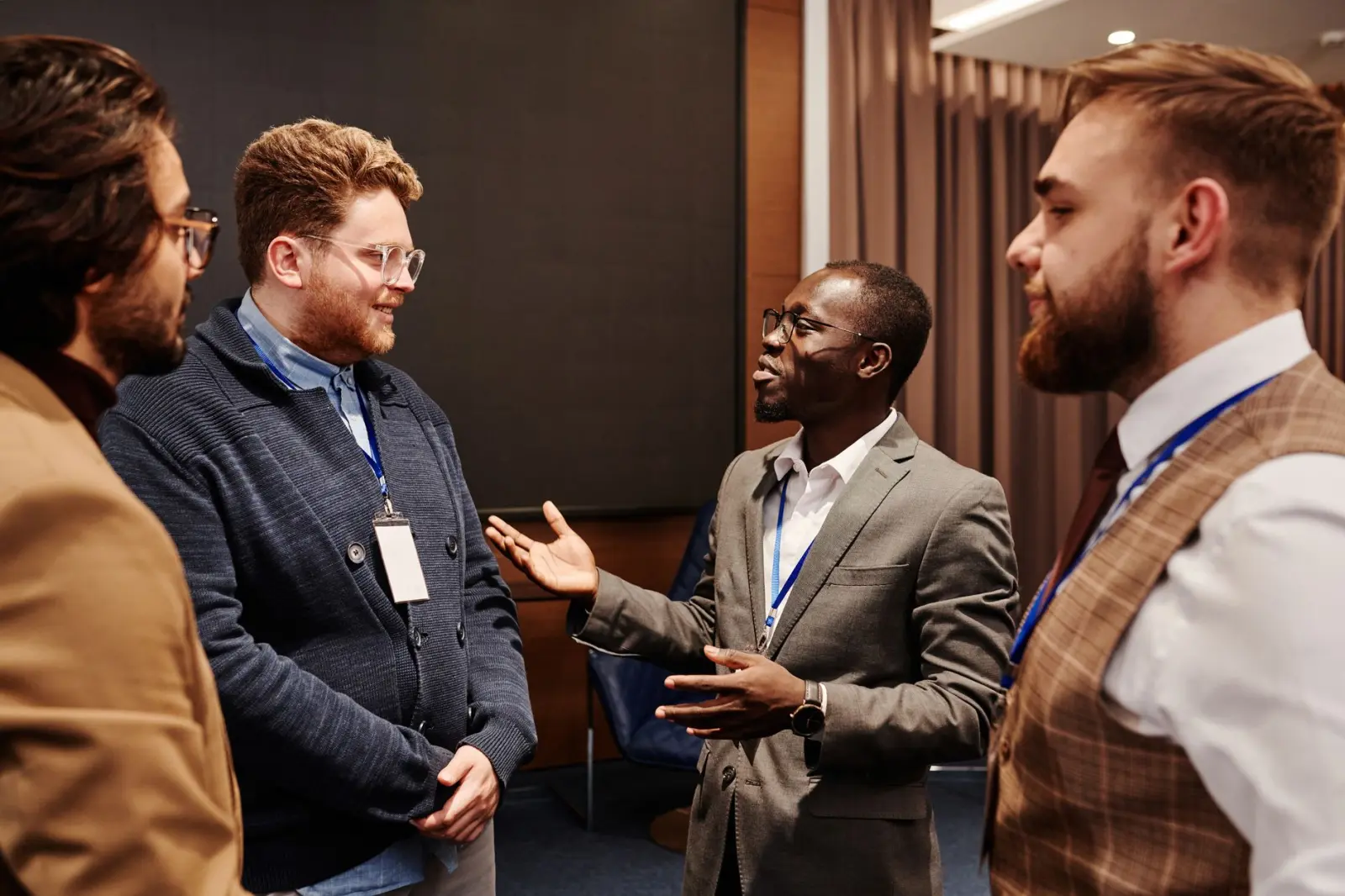
Most people who say they’re uncomfortable networking are actually uncomfortable with a specific story they’ve constructed about what networking is supposed to be. They imagine themselves as performers – entering a room, working the crowd, extracting value from strangers, leaving with a pile of business cards. That narrative creates tension because it’s exhausting and inauthentic. The discomfort isn’t really about the social interaction itself. It’s about the gap between who they are and who they think they need to become.
I’ve watched this play out dozens of times. Someone walks into a conference or industry event with their shoulders slightly raised, their smile a bit too fixed. They’re not relaxed because they’re operating from a script that doesn’t fit them. They’re trying to “network,” which in their mind means performing networking. The actual conversation – the exchange of ideas, the genuine curiosity about what someone else does – gets buried under the performance anxiety.
The first shift that tends to ease this is recognizing that networking isn’t a separate activity from normal conversation. It’s just talking to people who work in your field or adjacent fields. That sounds obvious, but the moment you stop treating it as a special event that requires special behavior, the physical tension often drops. You’re not “networking.” You’re having a conversation with someone who happens to work in tech, or education, or whatever domain you’re in.
What Actually Happens When You Show Up as Yourself
When you stop performing, other people relax too. This is worth observing directly. If you approach someone at an event with genuine curiosity – asking about their work because you actually want to know, not because you’re checking a box – the conversation has a different quality. The other person doesn’t feel like they’re being worked. They feel like someone is interested in them, which is fundamentally different from feeling like they’re a networking target.
This doesn’t mean you should be unprepared or unfocused. But preparation looks different when you’re not performing. Instead of memorizing an elevator pitch, you might think about what you actually do and why you find it interesting. Instead of planning conversation openers, you might notice what’s genuinely happening in the room – what people seem to be discussing, what problems are being mentioned – and respond to that.
The discomfort people report often comes from a mismatch between intention and behavior. They want to have real conversations but they’re executing a networking strategy. That internal conflict is what creates the awkwardness, not the social situation itself. I’ve seen introverts navigate rooms full of strangers with ease because they were genuinely interested in a few specific conversations. I’ve also seen extroverts who could talk to anyone feel deeply uncomfortable because they were trying to “work” the room and extract something from each interaction.
The Role of Preparation Without Overthinking
There’s a practical middle ground that most people miss. You don’t need to memorize talking points, but you do need to be clear about why you’re there. Are you exploring a new field? Looking to understand how others solve a specific problem? Trying to find collaborators? That clarity matters because it shapes which conversations feel natural to you and which ones feel forced.
When you know why you’re at an event, you can actually listen for relevance instead of trying to make every conversation count. You can have a short conversation with someone, recognize it’s not a fit for what you’re working on, and move on without feeling like you’ve failed. You can also recognize when someone is genuinely interesting to talk to, even if they’re not directly relevant to your current project. Those conversations often lead somewhere unexpected.
Preparation also means knowing something about the people or organizations that will be there, if that information is available. Not so you can impress them, but so you can ask informed questions. “What’s your approach to remote onboarding?” is a better conversation starter than “So what do you do?” if you already know the company’s general focus. It shows you’ve paid attention, and it immediately moves past the awkward small talk phase.
The Physical Side of Comfort
There’s a practical element that gets overlooked. Where you position yourself in a room matters. Standing near the food or the entrance creates natural opportunities for conversation without having to force your way into an established group. If you’re standing alone in the middle of the room, you feel more exposed and more likely to approach people aggressively, which creates tension.
How long you stay matters too. You don’t need to work a room for three hours. Having a clear endpoint – “I’ll stay for 90 minutes” – actually reduces anxiety because you’re not trying to extract maximum value from every minute. You can have a few genuine conversations, make a few connections, and leave. That’s a successful event. The pressure to stay longer and talk to more people is often self-imposed.
Drinking alcohol to ease the discomfort is common, but it usually backfires. It might feel easier in the moment, but it tends to make people less present and less able to have the kind of conversations that actually matter. You’re also more likely to say something you regret or come across as less professional. The discomfort you’re trying to medicate with a drink is usually better addressed by adjusting your approach.
When Discomfort Signals Something Real
Sometimes the discomfort is legitimate feedback. If you’re in a room full of people who are genuinely hostile or dismissive, that’s worth noticing. If you’re at an event where everyone is performing and extracting and nobody is actually connecting, that’s worth noting too. Not every networking event is worth your time. Some environments are just transactional and shallow, and recognizing that is useful information.
There’s also a difference between the mild discomfort of doing something unfamiliar and the deeper discomfort of being somewhere you don’t belong. The first one tends to fade as you get more comfortable with the format. The second one doesn’t. If you consistently feel out of place at certain types of events, it might be worth exploring whether those are actually the right venues for you, or whether you’re just in the early stages of building comfort in a new community.
After years of watching how people navigate professional spaces, the pattern is clear: the discomfort usually decreases when you stop treating networking as a performance and start treating it as what it actually is – a chance to have conversations with people who work in your space. The goal isn’t to work the room. The goal is to have a few good conversations and leave with a clearer sense of what’s happening in your field. Everything else is just friction you’re adding to yourself.