
There is a peculiar moment that happens in nearly every learning environment I have worked in – whether classroom, workshop, or on-the-job setting. Someone has absorbed information, understood the concepts, maybe even performed well on an assessment. Then they encounter the real thing. A student who grasped the physics of a pulley system struggles when actually rigging one. A nurse who memorized medication protocols freezes during a chaotic shift. A software developer who studied algorithms can’t debug their own code under time pressure. The gap between comprehension and capability is not a failure of instruction. It is the natural boundary between passive knowledge and embodied skill.
Practical experience works differently than other forms of learning because it forces the nervous system and the mind to integrate simultaneously. When you read about something or hear it explained, you are processing information through language and abstraction. When you actually do it, you are managing sensory feedback, timing, physical coordination, decision-making under uncertainty, and the emotional weight of consequence. Your hands know things your words cannot articulate. Your intuition develops through repetition in ways that lectures cannot accelerate.
I have noticed that learners often underestimate how much they need to *fail* in practical settings before competence emerges. This is not pessimism. It is observation. The mistakes made during practice – the ones where you see the immediate result of your action – create a different kind of memory than mistakes caught by a quiz. When a welder produces a joint that cracks under stress, that failure is more instructive than any textbook diagram. The learner does not just understand why it failed. They feel the consequences of their technique in a way that changes how they approach the next attempt.
The Invisible Work Behind Fluency
Competence in any practical domain involves layers that are rarely visible to someone observing from outside. A surgeon’s steady hand is not just motor control. It reflects thousands of hours of calibrating pressure, anticipating tissue response, and recognizing subtle visual cues that signal complications. A teacher’s ability to read a classroom and adjust in real time comes from having taught hundreds of lessons and learning to notice what works and what does not. An experienced mechanic diagnosing an engine problem is drawing on patterns accumulated across years of similar but never identical situations.
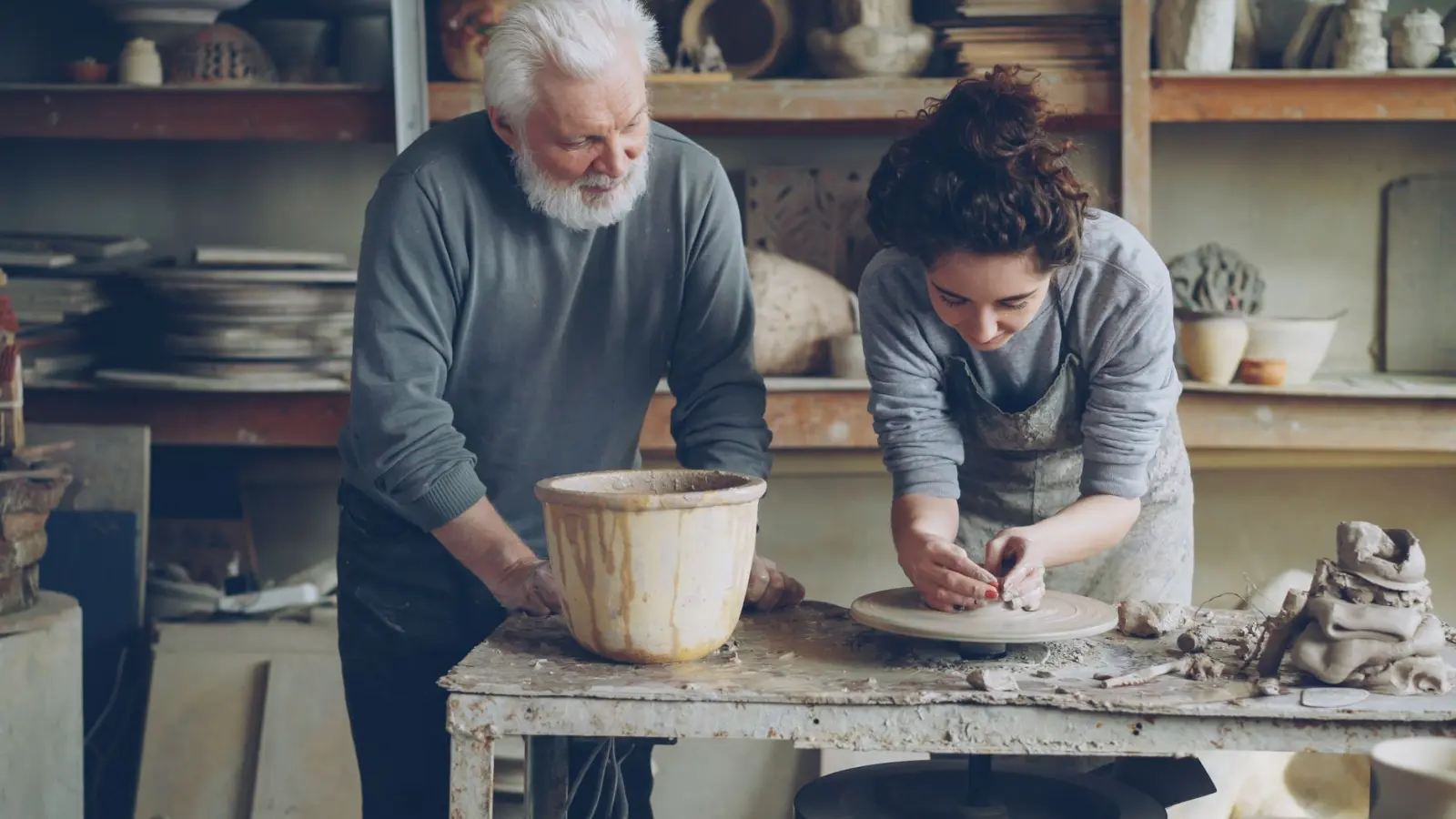
What makes this kind of learning stick is that it happens in context. The learner encounters problems that matter, where the stakes are real enough to demand attention. A student practicing a skill in isolation learns something different than a student practicing that skill as part of solving an actual problem. The second learner is not just refining technique. They are learning when to apply it, how to adapt it, and what to do when it does not work as expected.
I have also observed that people learn faster when they have some autonomy in how they approach a task. Not complete freedom – that often leads to confusion and wasted time. But enough room to make choices, test hypotheses, and discover what works for their own hands and mind. A musician who is simply told to practice scales will improve slowly. A musician who is learning to play a piece they care about, and who discovers through practice that certain scales are foundational to that piece, often progresses more rapidly and retains the skill more durably.
When Experience Teaches the Wrong Lesson
Not all practical experience produces good learning. I have seen people accumulate years of hands-on time and still perform poorly because they were never given feedback on what they were doing wrong. A driver can log tens of thousands of miles and still have dangerous habits if no one ever corrected them. A teacher can stand in front of classes for decades and never improve their craft if they receive no meaningful observation or critique. Experience without feedback is just repetition. It can entrench mistakes as easily as it can build skill.
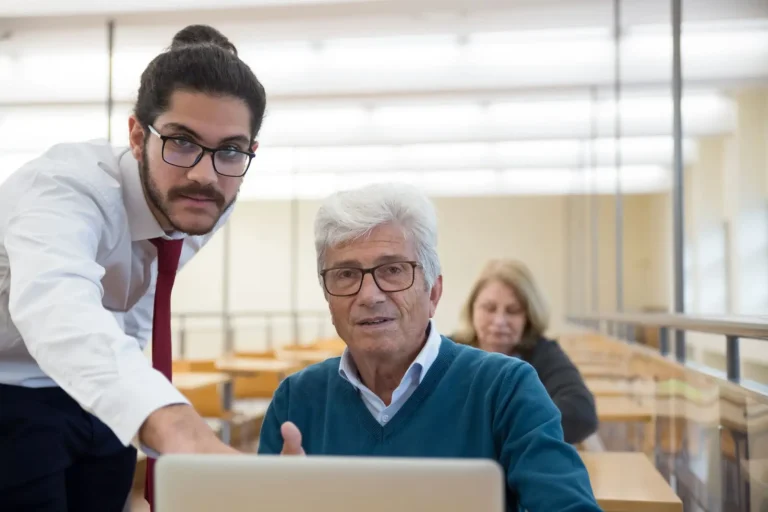
The quality of feedback matters enormously. Vague praise or generic criticism does little. Specific, timely feedback that points to what actually happened and why – that changes behavior. A coach who watches a swimmer and says “your turn was sloppy” is less useful than one who says “you are dropping your elbow before your hip rotates, which kills your momentum.” The second feedback connects the observable action to the underlying problem and gives the learner something specific to correct.
There is also a difference between learning from experience and learning from mistakes. Not every mistake teaches equally. Some mistakes are so small or so infrequent that they produce no lasting change. Others are so catastrophic that they create anxiety rather than learning. The most productive mistakes are the ones that are frequent enough to matter, clear enough to diagnose, and recoverable enough that the learner can try again. This is why deliberate practice in controlled environments is often more efficient than learning entirely through real-world trial and error.
The Role of Reflection in Practical Learning
I have worked with many practitioners who are highly skilled but struggle to explain what they do. They can perform the task flawlessly but cannot articulate the principles underlying their performance. This is not unusual. Practical knowledge often develops tacitly, through doing rather than through conscious analysis. Yet there is a difference between someone who simply does well and someone who can adapt their skill to new situations or teach it to others. That difference often comes down to reflection.
When learners take time to think about what they did, why it worked or did not work, and what they might do differently next time, they are converting experience into understanding. This does not require elaborate journaling or formal analysis. It can be as simple as a brief conversation with a mentor or a few minutes of quiet thought after a task. The point is to create space between doing and moving on, to let the experience settle and become conscious rather than remaining purely intuitive.
I have noticed that learners who are taught to ask themselves questions – What happened? Why did it happen? What would I do differently? – tend to progress faster than those who simply repeat the same task over and over. The questions act as a bridge between the practical experience and the conceptual understanding that allows the skill to transfer to new contexts.
Practical experience remains one of the most powerful teachers available, but only when certain conditions are present. There must be opportunity to actually do the thing, not just observe or simulate it. There must be feedback that is specific and timely enough to guide improvement. There must be enough repetition and variation for patterns to emerge. And there must be moments of reflection where the learner can make sense of what their experience is teaching them. Without these elements, practice becomes mere repetition. With them, it becomes the foundation of genuine competence.